
La formation intitulée « Lutte contre les flux financiers illicites : comprendre les impacts socio-économiques, les méthodes de mesure et les interventions politiques » vise à renforcer les connaissances, les compétences et les capacités des participants afin qu’ils puissent analyser et lutter contre les flux financiers illicites en Afrique et au-delà.
Comprendre l’écosystème des flux financiers illicites
Définir les flux financiers illicites, les distinguer des flux financiers connexes et expliquer leurs impacts économiques, sociaux et politiques.
Identifier les principaux facteurs, mécanismes et tendances mondiales et africaines en matière de flux financiers illicites.
Appliquer des méthodologies de mesure
Utiliser les cadres de référence de la CNUCED pour mesurer les flux financiers illicites liés à la fiscalité et au commerce (par exemple, la fausse facturation commerciale, le transfert de bénéfices, la fortune offshore).
Appliquer les méthodologies de l’ONUDC pour mesurer les flux financiers illicites provenant de la criminalité et des marchés illégaux (par exemple, le trafic, la corruption, le financement du terrorisme).
Évaluer les atouts, les limites et les besoins en données des différentes approches de mesure.
- Directeur de cours: Kathy Nicolaou-Manias
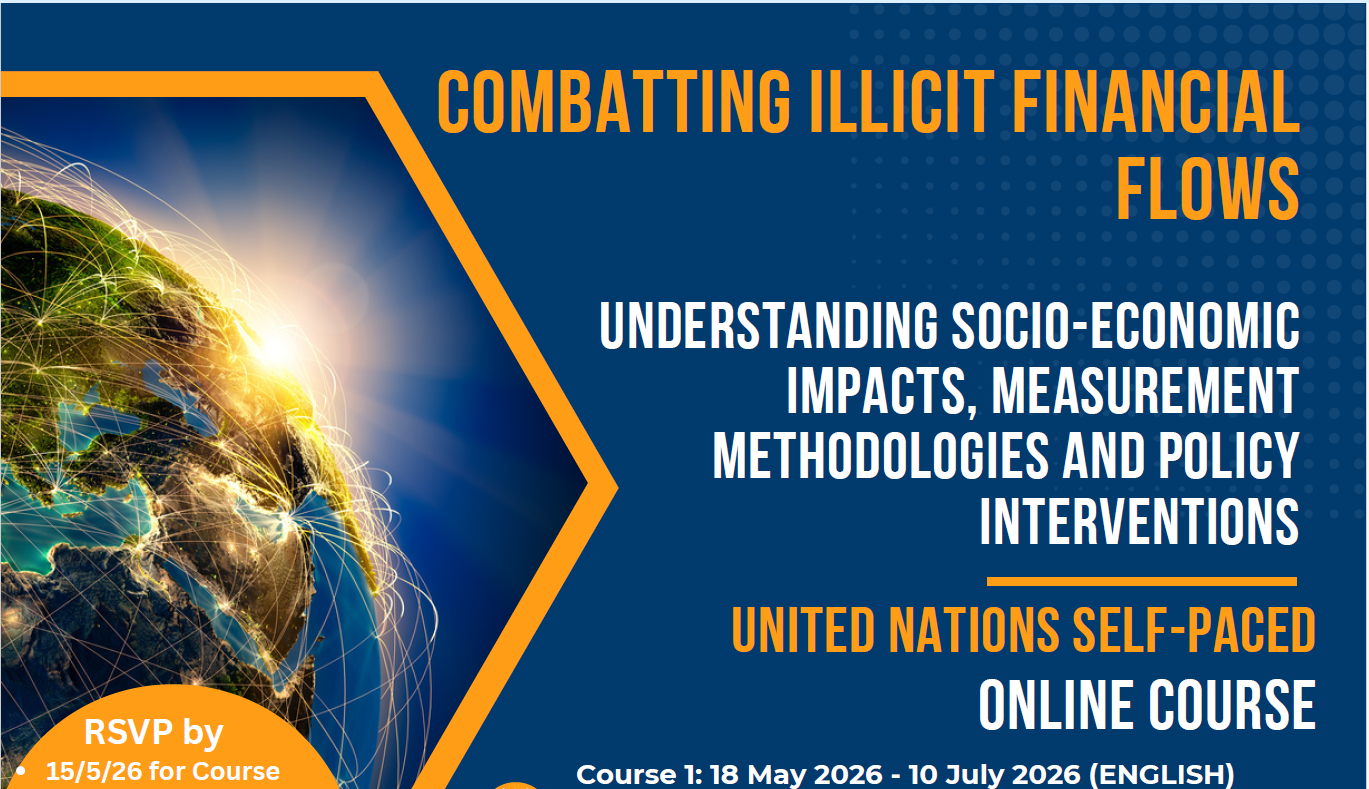
The course Combatting Illicit Financial Flows: Understanding Socio-economic Impacts, Measurement Methodologies and Policy Interventions aims to build the knowledge, skills, and capacity of participants to analyse and address IFFs in Africa and beyond.
Understand the Ecosystem of IFFs
Define IFFs, distinguish them from related financial flows, and explain their economic, social, and political impacts.
Recognise the main drivers, mechanisms, and global/African trends in IFFs.
Apply Measurement Methodologies
Use UNCTAD’s frameworks to measure tax- and trade-related IFFs (e.g. trade misinvoicing, profit shifting, offshore wealth).
Apply UNODC methodologies to measure IFFs from crime and illegal markets (e.g. trafficking, corruption, terrorism financing).
Assess the strengths, limitations, and data requirements of different measurement approaches.
- Directeur de cours: Kathy Nicolaou-Manias
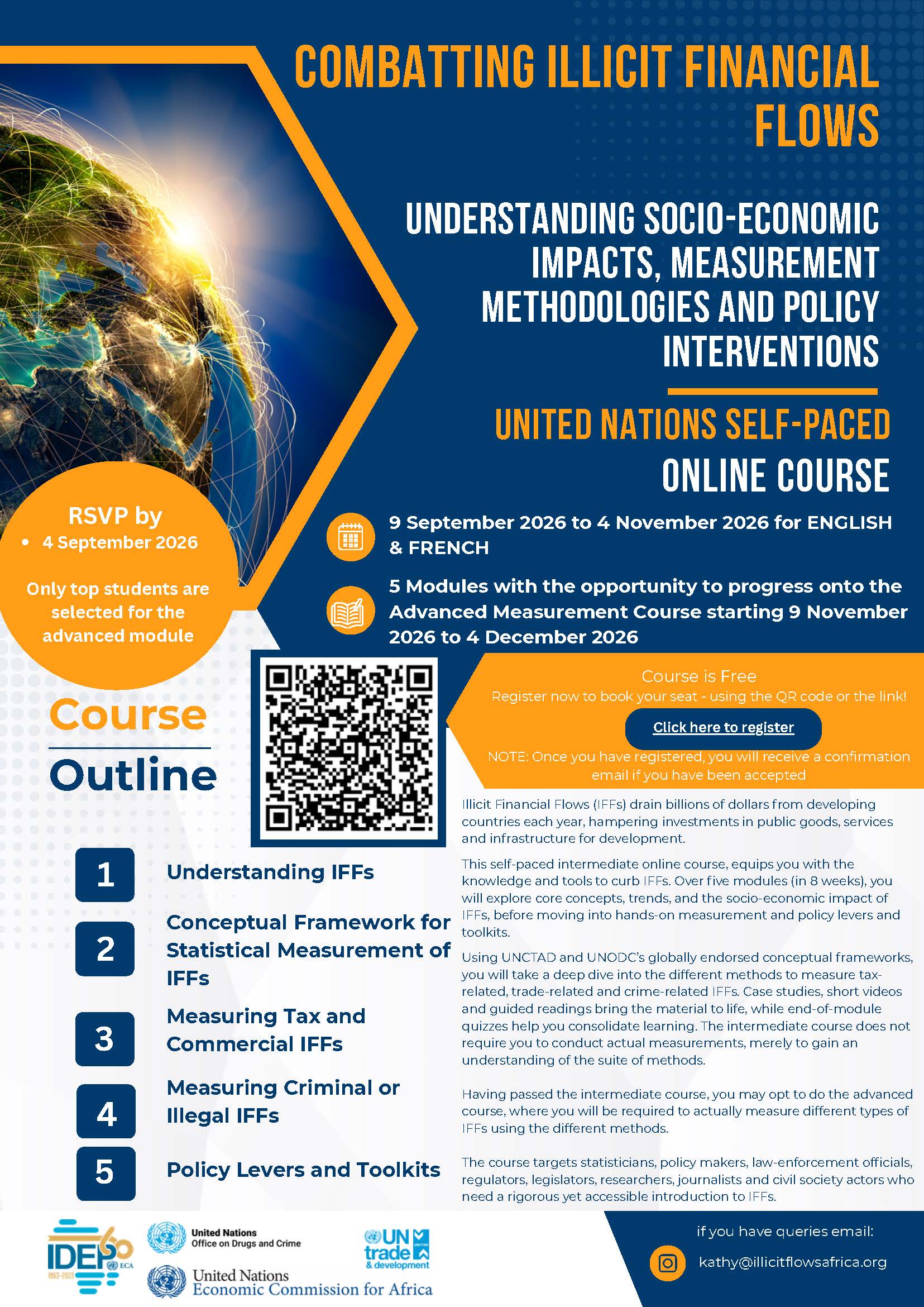
Illicit Financial Flows (IFFs) drain billions of dollars from developing countries each year, hampering investments in public goods, services and infrastructure for development.
This self-paced intermediate online course, equips you with the knowledge and tools to curb IFFs. Over five modules (in 8 weeks), you will explore core concepts, trends, and the socio-economic impact of IFFs, before moving into hands-on measurement and policy levers and toolkits.
Using UNCTAD and UNODC’s globally endorsed conceptual frameworks, you will take a deep dive into the different methods to measure taxrelated, trade-related and crime-related IFFs. Case studies, short videos and guided readings bring the material to life, while end-of-module quizzes help you consolidate learning. The intermediate course does not require you to conduct actual measurements, merely to gain an understanding of the suite of methods.
Having passed the intermediate course, you may opt to do the advanced course, where you will be required to actually measure different types of IFFs using the different methods.
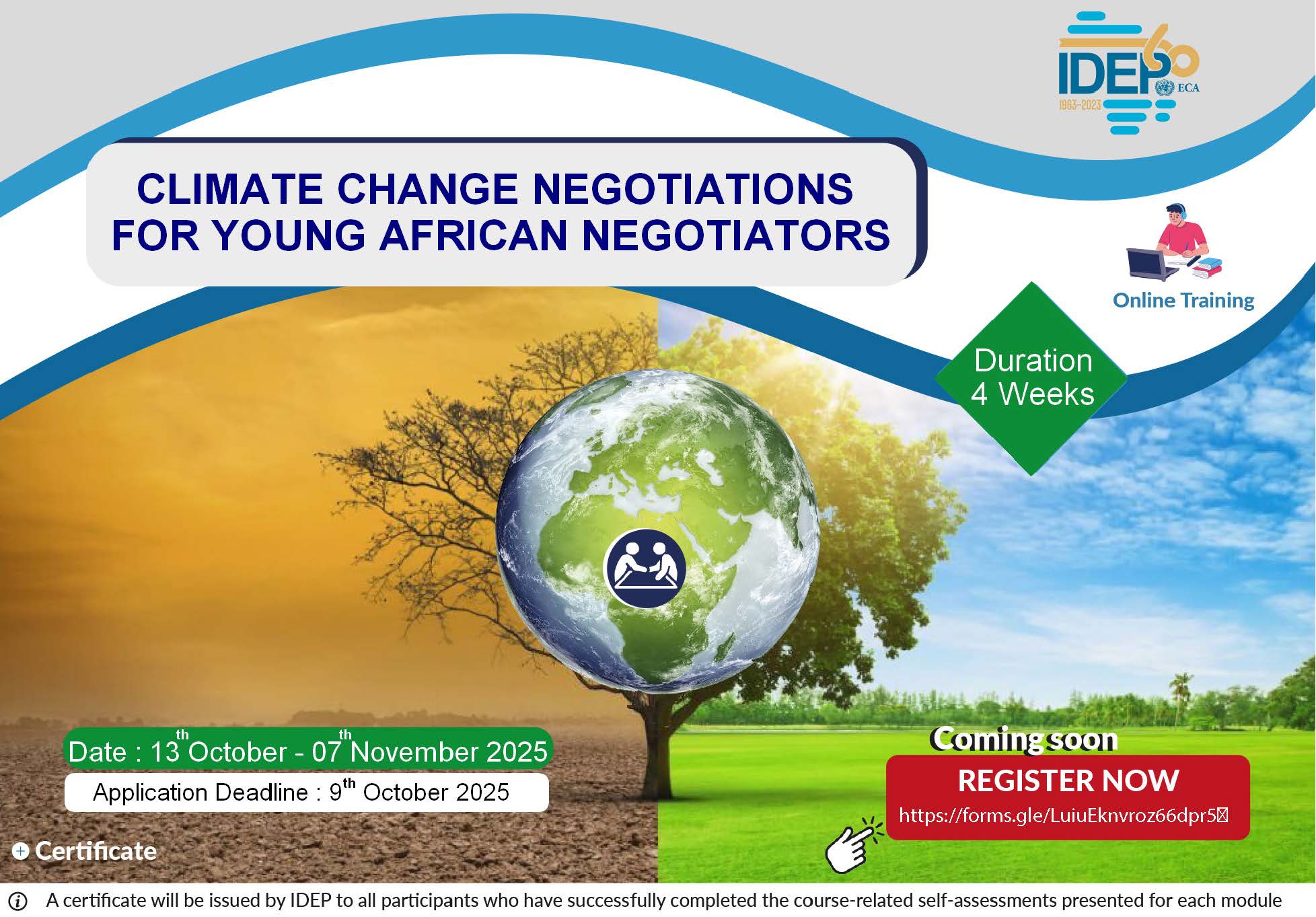
The multilateral climate change processes have evolved over time from the non-binding commitment under UN Convention to the legally binding commitments for developed countries under the Kyoto Protocol and to the Paris Agreement (PA) that build upon the convention and brings all nations into a common cause to undertake ambitious efforts to combat climate change and adapt to its effects, with enhanced support to assist developing countries. The PA also address the issues of loss and damage.
Following the completion of the PA’s rulebook, the process is now focusing on the implementation of mitigation and adaptation with enhanced support to assist developing countries to achieve their commitments. The PA added the loss and damage into its workstream. This online training will deal with negotiation of work programmes under the following areas; just transition; adaptation mainly dealing with adaptation finance and capacity; operationalization of the loss and damage fund and its assessment; negotiating carbon markets; climate finance in the context of financing adaptation, assess to existing funds, methods of tracking, project development, monitoring and evaluation, gender and youth.
- Directeur de cours: Justine AYUK
- Directeur de cours: Richard Ssewakiryanga

- Directeur de cours: Kathy Nicolaou-Manias


